

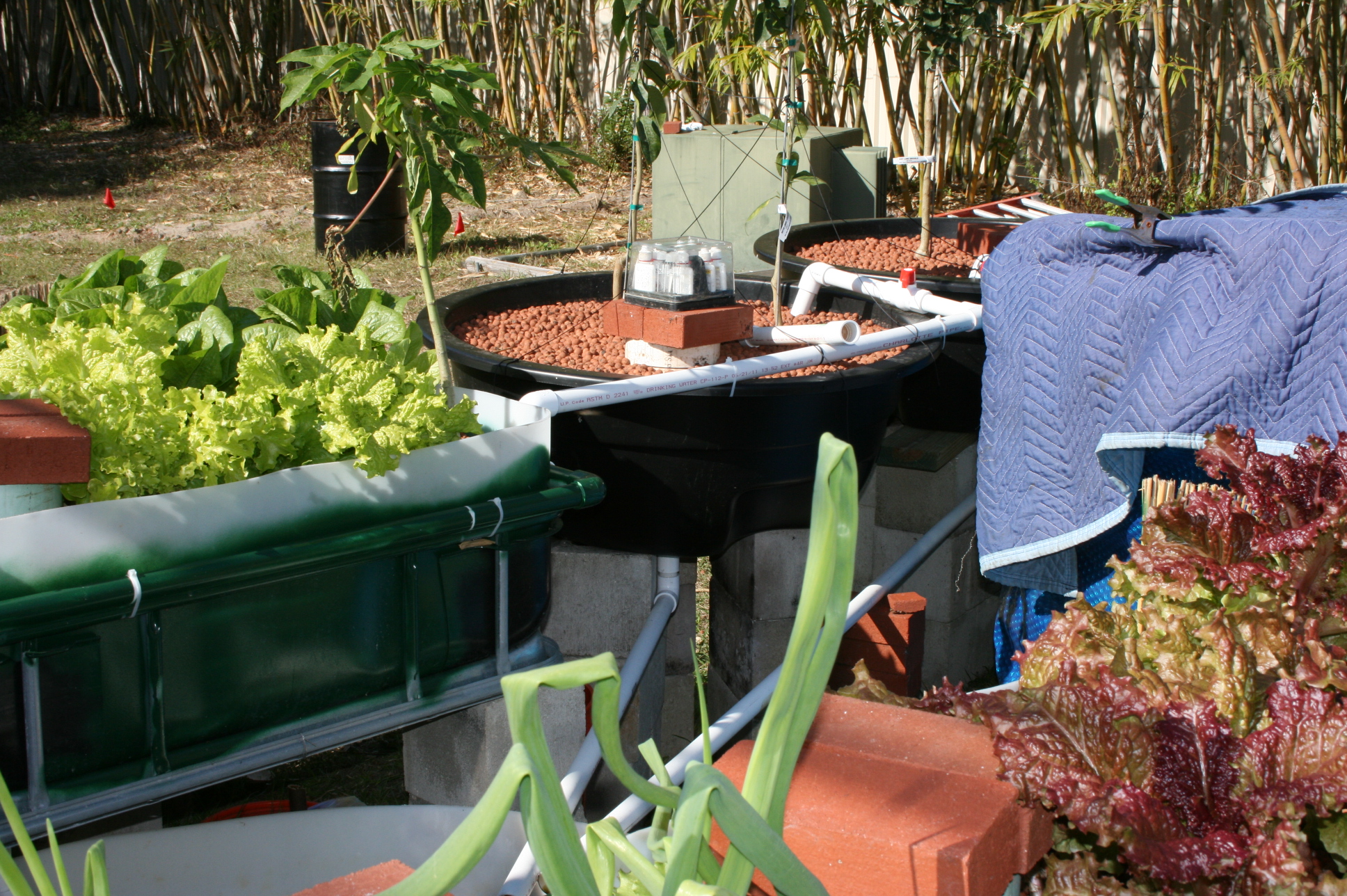
Both hydroponics and aquaponics have clear benefits over soil-based gardening: lessened, adverse environmental impacts, reduced consumption of resources, faster plant growth, and higher yields. Many believe that aquaponics is a better option over hydroponics when choosing a soilless growing system.
Simply put, the difference between hydroponics and aquaponics is that aquaponics uses fish to provide nutrients, and hydroponics uses formulated solutions.
Thereof, Why is traditional farming better than aquaponics?
Environmental. Water Conservation: Aquaponics uses 90% less water than traditional farming. Water and nutrients are recycled in a closed-loop fashion which conserves water. … Energy Conservation: Even with grow lights, we use less energy than conventional commercial farming!
Also to know is, What are the advantages of aquaponics? – Fast Plant Growth. Providing nutrients and an oxygen rich environment for the roots of aquaponic plants makes them grow 3 times as fast compared to soil. …
– Health. …
– Reduced Chemical Use. …
– Food Localisation. …
– Food Security. …
– Reduced Water Use. …
– Smarter Farming. …
– Reduced Pollution and More Recycling!
Subsequently, question is, What are the pros and cons of aquaponics? – Pros of Aquaponics. Environmental Friendly. Organic Fertilizer. Saves Water. High Level of Nutrient Utilization. Affordable. Easy to Maintain. Space Efficient. …
– Cons of Aquaponics. Not Many Crops Available. Initial Cost. High Consumption of Electricity. Must be Professionally Installed. Unexpected Failure.
– Conclusion.
Also, Is aquaponics bad for fish?
Aquaponic systems run pretty well for the most part, with minimal supervision needed once all the plumbing is connected and the fish are happy and the seedlings are all planted out. As a food production system, they work exceptionally well. Occasionally however things can go wrong leading to sudden fish deaths.
Are aquaponic fish healthy to eat?
A separate tank may be required for the hatchlings to protect them until they reach a suitable size to be reintroduced into the system with the adults. They are an excellent source of protein and iron, making them a healthy food choice.
What are the advantages and disadvantages of hydroponics?
– Hydroponic Farming in a Nutshell.
– Advantages of Hydroponic Farming. No Soil Involved. Optimal Use of Location. Complete Control Over Climate. Saves Water. …
– Disadvantages of Hydroponic Farming. Time Consuming. Requires Some Expertise. Risks Of Water and Electricity.
What is the only major difference between hydroponics and regular agriculture?
The major difference between hydroponics and conventional agriculture is the absence of natural soil in the growing process. As described above, in conventional agriculture, plants are grown in soil. But as we have also described above, soil serves only as a support medium for plants.
What are the pros and cons of hydroponics?
– Nutrient Intake. While figuring out the perfect blend of nutrients can be hard at first, they are much easier to control. …
– No Pests, No Problem. Ok, so maybe your plants won’t be completely guarded from pests, but for many soil is necessary to live. …
– More Personal Space. …
– Setup Costs. …
– Learning Curve. …
– Equipment Failure.
What is an advantage of aquaculture and hydroponics?
For aquaculture farmers, aquaponics provides a source of income during the period of time where the fish are not yet ready for harvest, and for hydroponic farmers, it creates an additional source of income to produce the same product, all while requiring less inputs.
What are the problems with hydroponics?
Hydroponic systems, whether homemade or store bought, suffer from a few common problems. These problems include algae growth, leaks, clogs, inconvenience of use, the temperamental nature of some systems, (which make them high maintenance), and the expense of maintaining and reusing different types of systems.
Why is aquaponics important to the future of farming?
Advantages of aquaponics include crop production at least ten times higher than traditionally farmed plots of equivalent size, 85-90% less water consumption than traditional irrigation, low energy consumption, year-round crop production and flood and drought resilience. …
Which is more profitable aquaponics or hydroponics?
Aquaponics and hydroponics vary in finance, difficulty, materials, and set up. … Simply put, the difference between hydroponics and aquaponics is that aquaponics uses fish to provide nutrients, and hydroponics uses formulated solutions.
What are two benefits of aquaponics?
Aquaponics uses 90% less water than traditional farming. With our system, we can grow any time of year, in any weather, anywhere on the planet. Because aquaponics recycles the water in the system, we can grow in droughts and areas with little water. Less pests to deal with since we are growing indoors.
Should farmers use aquaponics?
With a natural ecosystem that recycles water continuously, an aquaponics system uses 90% less water versus traditional farming. … Ultimately, aquaponics systems can help urban food growers maximize food yield. This is possible by harvesting both fish for a protein source and fresh plant produce.
Are aquaponics safe for fish?
Aquaponics is an innovative method of farming which uses fish-waste as a natural fertilizer for plants in a nutrient-rich ecosystem. The plants and nitrifying bacteria remove ammonia and other nitrogenous compounds from the water, making it safe for fish to live in.
What are some pros and cons of aquaponics?
– Pros of Aquaponics. Environmental Friendly. Organic Fertilizer. Saves Water. High Level of Nutrient Utilization. Affordable. Easy to Maintain. Space Efficient. …
– Cons of Aquaponics. Not Many Crops Available. Initial Cost. High Consumption of Electricity. Must be Professionally Installed. Unexpected Failure.
– Conclusion.
Don’t forget to share this post 💖
References and Further Readings :