

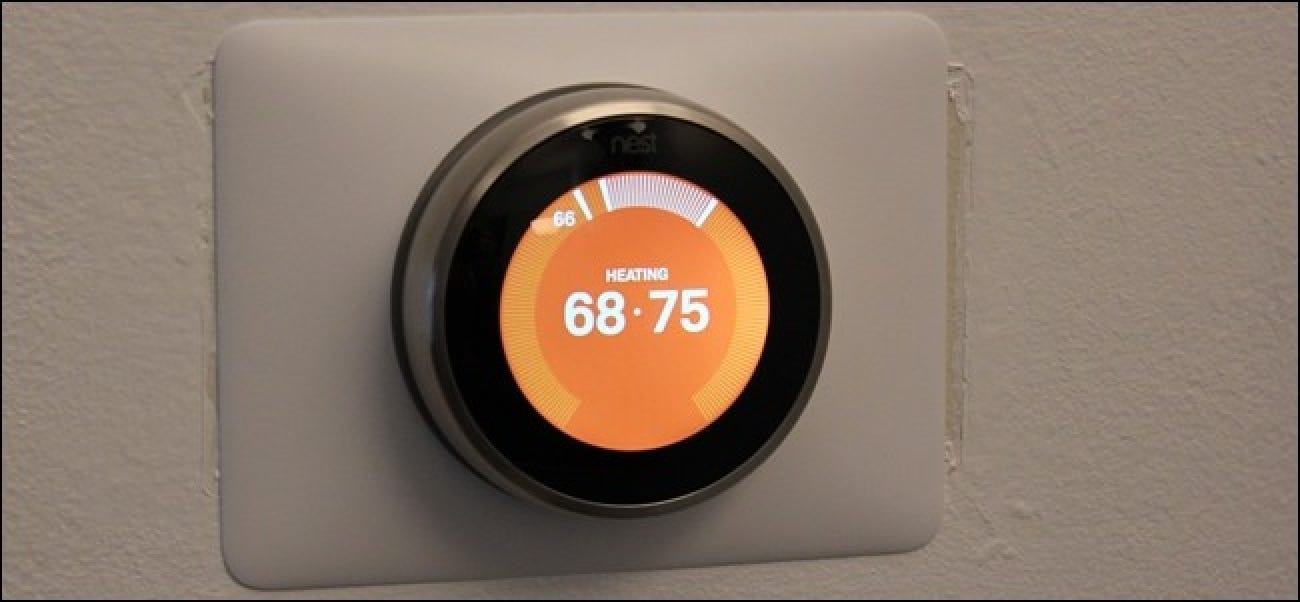

Auto-Schedule is a feature in Nest thermostats that is on by default. It chooses temperatures that have been set by the user at least once and begins to make adjustments to temperature after learning your daily activity. Turn auto-schedule off to keep the temperature from regularly changing.
Press on your Nest Thermostat unit to bring up the main menu. Use the silver scroll wheel and go to “Thermostat”. Push on the unit to select it. From there, scroll and select either “Heat”, “Cool”, “Heat-Cool”, or “Off”, just like you would in the Nest app.
Thereof, How do I stop nest from changing temperature?
With the Nest app: Open the Nest app and select your Nest thermostat. Select Settings Auto-Schedule. Tap the switch to turn it off.
Also to know is, How do I stop nest from auto adjusting? – Open the Nest app and select your Nest thermostat.
– Select Settings Auto-Schedule.
– Tap the switch to turn it off.
Subsequently, question is, Why does Nest automatically changing temperature? Auto-Schedule is a feature in Nest thermostats that is on by default. It chooses temperatures that have been set by the user at least once and begins to make adjustments to temperature after learning your daily activity.
Also, What is heat cool mode on Nest thermostat?
When Heat • Cool mode ( heat-cool ) is selected, the Thermostat will keep the home comfortable, within a preferred temperature range. When Eco Temperatures (eco) is selected, the Thermostat will apply energy-saving algorithms to keep the house comfortable and reduce energy usage. Thermostats in this mode display ECO.
Does heating use more electricity than cooling?
The simple answer to your first question is yes, because heating uses more energy, it does cost more to run the heat in your home than it does to cool your home with A/C. … In fact, it can take up to three times more electricity to heat a home than to cool it, which equates to a higher bill.
Why is cooling harder than heating?
It is because of the second law of thermodynamics. There are many irreversible processes that can be used to heat something. … There is a maximum efficiency for work to be used to cool something by removing heat from one source at lower temperature and move it to a source at a larger temperature.
What takes more energy heating or cooling?
The answer, experts say, is that both heating and cooling your home take large amounts of energy, more than we use for any other appliance. But according to researchers at National Geographic’s The Green Guide, you will probably consume more energy heating your home than cooling it.
Is there a thermostat that switches from heat to cool automatically?
Sensi thermostat has a feature called Auto Mode, which allows the thermostat to switch from Heat to Cool, or Cool to Heat automatically. … Select “Auto” to allow the thermostat to switch between heating and cooling based on room temperature and the selected heating and cooling set points.
What is eco temperature on nest?
One of the biggest selling points of Nest’s thermostats is that they are designed to help you save money on your utility bill. As the name suggests, Eco Temperatures are one of the biggest reasons these savings happen. Eco Temperatures range from 40-70°F for your heating mode and 76-90°F for cooling.
How much energy does heating and cooling use?
In the Annual Energy Outlook 2020, the U.S. Energy Information Administration (EIA) estimates that in 2019, electricity use for cooling the interior of buildings (space cooling) by the U.S. residential and commercial sectors was about 380 billion kilowatthours (kWh), which was equal to about 10% of total U.S. …
Can we use AC for heating?
It works well down to about 40 degrees, but after that there is not enough heat outside to draw the cold air off of the coils. Not unless you’ve bought a special ac that is designed to work as a heater. … However, if it’s a window mounted AC unit, you could turn it backwards and it would heat your house.
Why is my nest heating instead of cooling?
If your heating and cooling system is a heat pump and it blows warm air when your Google Nest thermostat is in cooling mode (the background on the display is blue), you may need to adjust your heat pump O/B wire orientation settings on the Nest Thermostat.
Why does heating cost more than cooling?
Heating a home is more energy-intensive than cooling because of how the home is heated and cooled. Cooling a home involves moving the excess heat out so that it’s cooler inside. … Moving heat requires a lot less energy than making it, which is why cooling ends up being less expensive than heating.
What is the most energy efficient heating and cooling system?
Geothermal Heat Pumps (GHPs). GHPs are similar to air source heat pumps, but use the ground instead of outside air to provide heating, cooling, and often water heating. Because they use the earth’s natural heat, they are among the most efficient and comfortable heating and cooling technologies currently available.
Why is heating more expensive than cooling?
Heating a home is more energy-intensive than cooling because of how the home is heated and cooled. Cooling a home involves moving the excess heat out so that it’s cooler inside. … Moving heat requires a lot less energy than making it, which is why cooling ends up being less expensive than heating.
Why is nest heating instead of cooling?
If your heating and cooling system is a heat pump and it blows warm air when your Google Nest thermostat is in cooling mode (the background on the display is blue), you may need to adjust your heat pump O/B wire orientation settings on the Nest Thermostat.
Don’t forget to share this post 💖
References and Further Readings :